
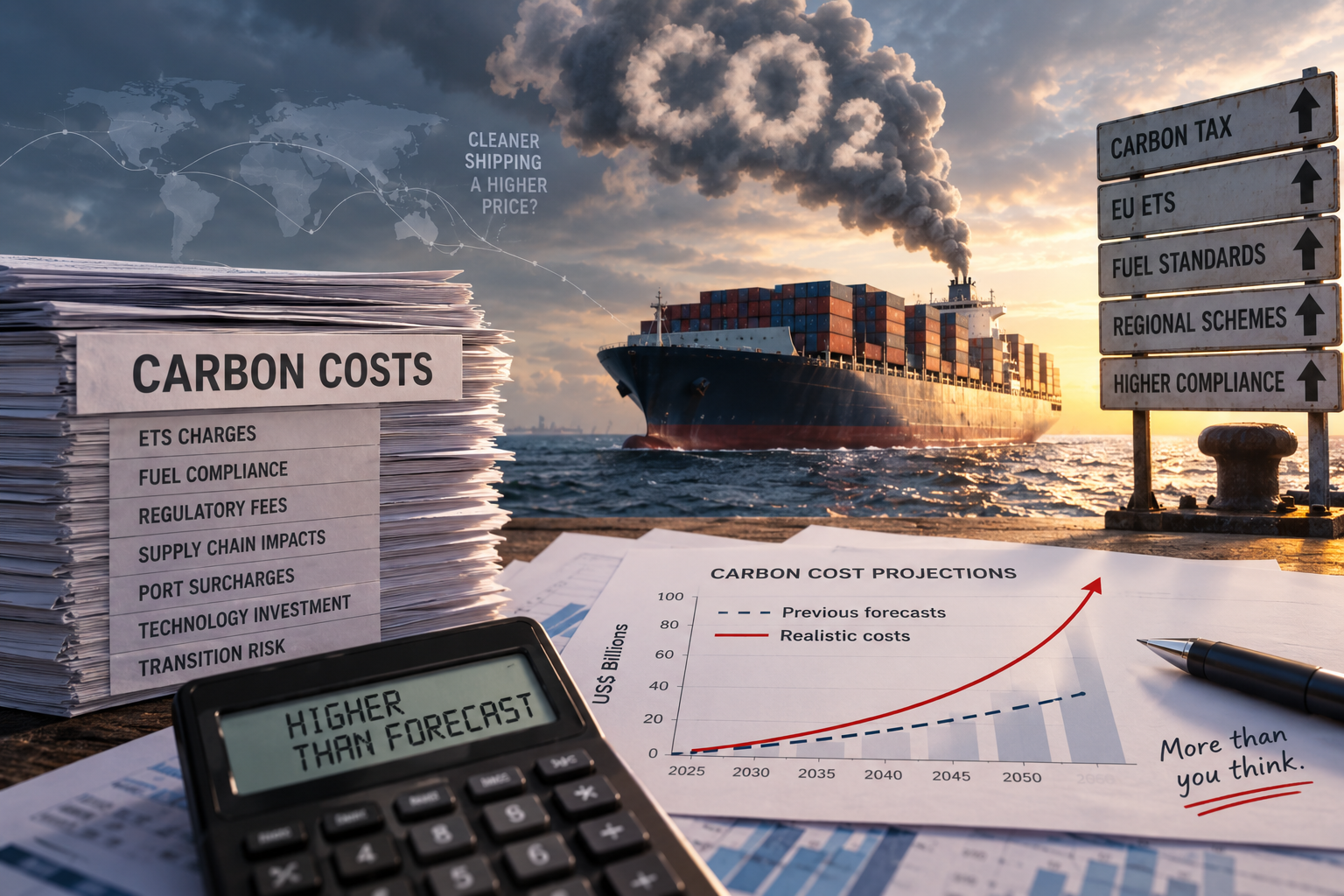
Shipping’s Carbon Bill Could Be Much Higher Than Forecasts
A new approach to stress-testing carbon costs suggests that the market is underestimating the potential financial strain on vessels trading in emissions-regulated zones.
The shipping industry is increasingly finding itself in the crosshairs of climate regulation. The European Union’s Emissions Trading System (ETS) is one such mechanism, a cap-and-trade scheme that imposes a cost on carbon emissions for a growing number of maritime voyages. The logic is straightforward: make polluting expensive, and operators will eventually seek cleaner alternatives.
However, the actual financial impact of these evolving carbon costs is proving to be a complex and often underestimated variable. The prevailing models tend to project a linear progression of carbon prices, assuming a steady, predictable rise. This approach, while convenient, overlooks the inherent volatility and the potential for sharper, more unpredictable cost escalations. There is a certain dark comedy to the market’s collective sigh of relief when projections suggest a manageable carbon bill, as if regulatory bodies would prioritise predictability over the imperative to decarbonise at speed.